
AFL Betting 2026: Data-Driven Strategies & ROI
 Available in US
AFL and betting go together like meat pies and sauce. There’s something about footy that just begs for a punt maybe it’s the weekly rhythm of the season, the unpredictability of any given match, or simply that having money on the game makes watching your team get thrashed slightly more bearable. Whatever the reason, AFL generates more betting turnover than almost any other sport in Australia.
If you’re new to AFL betting or looking to improve your approach, you’re dealing with a sport that offers both tremendous opportunity and plenty of ways to lose money quickly. The markets are deep, the statistics are comprehensive, and the season runs long enough that you can develop genuine edges if you know what you’re doing. But the flip side is that bookmakers have spent years refining their AFL odds, and casual punters often underestimate how difficult it is to beat them consistently.
This guide walks through how AFL betting actually works in Australia, from understanding the different markets to developing strategies that go beyond backing your favorite team and hoping for the best. Whether you’re betting for fun or taking it more seriously, knowing what you’re doing helps you get better value and make smarter decisions.
AFL Line Betting: Calculating Value in 2026
Head-to-head markets are the simplest and most popular AFL bets. You’re picking which team wins the match, full stop. The bookmaker sets odds based on their assessment of each team’s chances. The favorite gets lower odds, the underdog gets higher odds. Richmond at 1.65 versus Carlton at 2.30 means Richmond is expected to win most of the time, but Carlton obviously has a legitimate chance or the odds would be even shorter.
The beauty of head-to-head betting is its simplicity. You don’t need to worry about margins or specific scores. Your team just needs to win. The downside is that favorites are often very short odds, meaning you risk a lot to win relatively little. Backing Geelong at 1.25 means you’re wagering $100 to profit just $25. Even if Geelong wins 80 percent of the time at that price, one loss wipes out the profit from three wins.
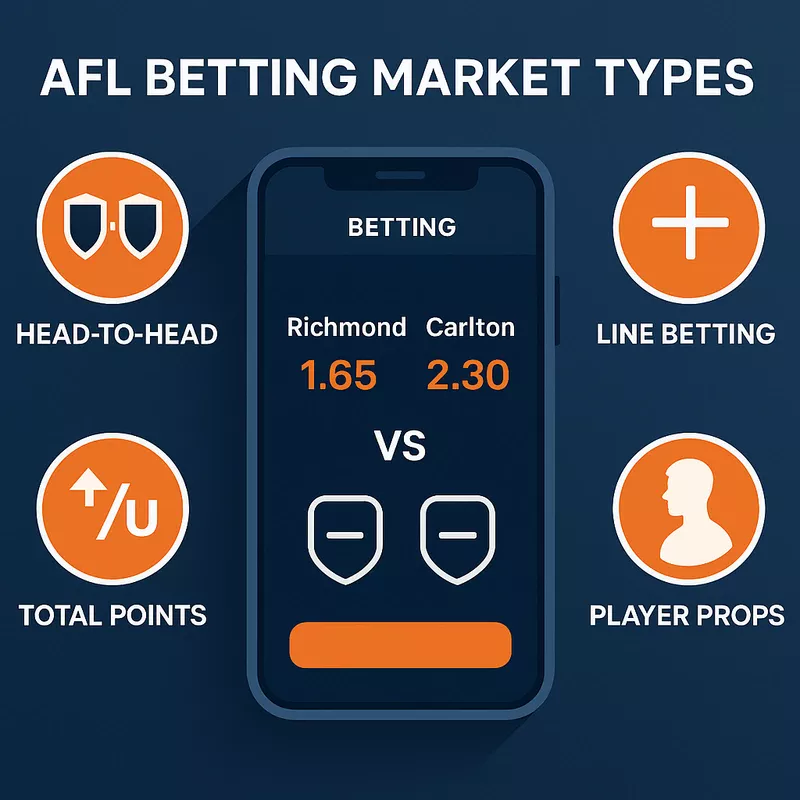
Line betting introduces handicaps that even out lopsided matches. Melbourne might be strong favorites over North Melbourne in a head-to-head bet, but with a line of minus 35.5 points, they need to win by 36 or more. North Melbourne gets plus 35.5, meaning they can lose by up to 35 points and line bets still win. When the match ends Melbourne 95, North Melbourne 68, that’s a 27-point margin. Melbourne won the game but didn’t cover the line. North Melbourne line bets win despite losing the match.
Line betting is where experienced punters often find more value than head-to-head markets. A team might be unbackable at 1.20 straight-up but presents decent value at 1.90 with a line. The trick is assessing whether the favorite will win comfortably or whether the underdog will keep it close. This requires understanding not just which team is better but by how much.
Total points markets involve betting on whether the combined score of both teams will be over or under a specified number. A match between high-scoring teams might have a line of 165.5 points. If you think it’ll be a shootout, bet the over. If you expect tight, defensive football, bet the under. Weather conditions, team styles, and venue characteristics all influence total scoring, giving knowledgeable punters opportunities to identify mispriced lines.
First goalscorer and last goalscorer markets are popular but tricky. You’re predicting which player will kick the opening or final goal of the match. The odds are tempting because pinpointing one player out of 44 on the field is difficult. But these bets are heavily influenced by luck. A key forward might be the logical first goalscorer choice, but a defender or midfielder snapping a goal from a stoppage early in the first quarter ruins the bet. These markets are fun for small stakes but hard to profit from consistently.
Player performance markets let you bet on individual statistics rather than match outcomes. Will a particular player kick three or more goals? Will they rack up 25-plus disposals? Will they take eight-plus marks? These markets require detailed knowledge of players, their roles, opponents, and recent form. They’re also vulnerable to rotation policies, injury management, and in-game tactical changes that affect individual opportunities.
Margin betting involves predicting the winning margin within specific ranges. Options might include 1-9 points, 10-19 points, 20-29 points, and so on. The further you get from even margins, the higher the odds. Picking the exact range is difficult, but these markets sometimes offer value when bookmakers misprice the probability of blowouts versus close finishes.
Quarter and half betting apply the same markets to shorter segments of matches. First quarter winner, half-time margin, third quarter line these markets let you take views on specific periods rather than the full match. Teams that start fast but fade, or those that build momentum through games, create opportunities in these markets.
Same game multis combine multiple markets from a single match into one bet with multiplied odds. You might back Richmond to win, Dustin Martin to kick two-plus goals, and total points over 155. All selections must hit for the bet to win. These are incredibly popular because they’re exciting and offer large payouts from small stakes, but they’re also significantly harder to win than single bets and often represent poor value despite the tempting odds.
To improve your results, you should also study our Australian horse racing betting manual for professional tips.
Where to Bet on AFL
Not all bookmakers are created equal when it comes to AFL betting. Some specialize in Australian football and offer superior products, while others treat it as just another sport in their catalog.
Neds has positioned itself as the bookmaker for serious footy punters. The Punter’s Toolbox feature provides daily AFL promotions during the season odds boosts on featured matches, money-back specials if your team loses by less than a goal, multi insurance where one leg failing triggers a bonus bet refund. These promotions genuinely add value if you’re betting regularly. The same game multi builder is comprehensive, the app is fast, and odds are consistently competitive.
Bet365 offers the most extensive AFL markets of any bookmaker. Beyond standard options, they provide incredibly detailed player props and niche markets you won’t find elsewhere. Their bet builder is the most sophisticated available, letting you construct absurd combinations with transparent odds adjustments. Live streaming isn’t available for AFL due to broadcast rights, but their live stats tracker provides detailed in-game information.
TAB remains strong for AFL despite increased competition. Their odds are competitive, particularly on racing, but football markets are solid too. The interface has improved significantly in recent years. TAB’s strength is reliability they’ll be taking AFL bets long after some newer operators have exited the market.
Unibet consistently offers decent AFL odds without being spectacular. Their platform is straightforward and reliable. Customer service is good. If you prefer no-frills betting without gamification or aggressive promotions, Unibet serves that need well.
Sportsbet dominates mainstream betting in Australia through aggressive marketing, though their odds are often slightly worse than competitors. The platform is user-friendly and the app is polished. For casual punters who aren’t comparing prices across bookmakers, Sportsbet is fine. For anyone serious about value, checking odds elsewhere before betting with Sportsbet makes sense.
The smart approach is maintaining accounts with three or four bookmakers and comparing odds before placing bets. The same head-to-head market might be 1.85 at one bookmaker and 1.95 at another. That 10-cent difference represents over 5 percent better value for identical risk. Multiply that across a season’s worth of bets and it becomes material.

Reading AFL Form and Statistics
AFL generates mountains of statistics, which is both blessing and curse. The data helps informed betting decisions, but drowning in numbers without context leads nowhere useful.

Recent form means more than historical performance. A team that won the premiership two years ago but has lost five straight matches isn’t the same proposition as their past success suggests. Focus on the last five to eight games as your baseline for current form. Consider not just wins and losses but the quality of those results. Scraping past bottom-four teams isn’t the same as dominating top-eight opponents.
Home ground advantage matters significantly in AFL. Teams playing at their home venue have familiarity with ground dimensions, weather patterns, and crowd support. The advantage varies by venue some grounds provide bigger edges than others but assuming an average advantage of 10-15 points for the home team is reasonable. This means a neutral matchup becomes a small favorite for whoever’s hosting.
Travel impact affects interstate matches differently than local derbies. Flying across the country, dealing with time zone changes, and playing in unfamiliar conditions creates genuine disadvantages. West Coast and Fremantle traveling east face this constantly. Melbourne teams traveling to Perth encounter it less frequently but still feel the effects. Quantifying travel impact is difficult, but ignoring it entirely leads to mispriced bets.
Injury news and team selections released Thursday evening (for Friday and Saturday matches) and Friday (for Sunday matches) can shift odds significantly. Losing a key forward, star midfielder, or critical defender changes a team’s prospects. The immediate odds adjustment after team announcements often overreacts, creating value betting against the crowd’s panic or excitement.
Weather conditions influence scoring and game style. Wet weather typically reduces total scoring, favors contested styles over finesse, and makes matches less predictable. Strong winds create uneven conditions where kicking with the wind provides massive advantages. The Bureau of Meteorology’s forecasts aren’t perfect, but checking expected conditions helps assess total points lines and whether high-skill teams will be hamstrung.
Head-to-head records between specific opponents reveal interesting patterns. Some teams consistently struggle against particular opponents for stylistic or psychological reasons. Melbourne might dominate most teams but inexplicably struggle against Western Bulldogs. These historical patterns don’t predict future results definitively but provide useful context.
Statistics like inside 50s, contested possessions, clearances, and tackle numbers indicate underlying performance beyond just scores. A team winning matches while being dominated in these categories might be due for regression. Conversely, a team losing close matches despite winning the stat sheet might improve soon. Looking beneath surface-level results helps identify overvalued and undervalued teams.
Developing AFL Betting Strategies
Backing favorites blindly is a losing strategy over time. Yes, favorites win more often than underdogs, but that’s already priced into the odds. If favorites won often enough to overcome the bookmaker’s margin, betting would be free money and bookmakers would go broke. The reality is that favorites are often overbet by casual punters who assume better teams always deliver, making underdogs occasionally offer superior value.
The key question isn’t which team is better but whether the odds accurately reflect the probability difference. Melbourne might clearly be superior to North Melbourne, but if Melbourne is priced at 1.15, they need to win about 87 percent of the time just to break even. Is Melbourne really winning 87 percent against North Melbourne, or more like 75-80 percent? If it’s the latter, value sits with North Melbourne despite them being worse.

Line betting often provides better value than head-to-head markets for lopsided matches. When a favorite is 1.20 straight-up, there’s almost no edge to be found unless you’re exceptionally confident they’ll win. But that same team with a line of minus 40 points might be 1.90, creating potential value if you believe they’ll win big. Assessing whether favorites will cover lines requires understanding not just who’s better but by how much and whether they’ll maintain effort through four quarters.
Contrarian betting involves identifying situations where public opinion has moved odds away from fair value. If a popular team coming off an emotional win gets overbet, their odds shorten beyond what their actual chances justify. The less glamorous opponent becomes value. This doesn’t mean blindly betting against public favorites, but when you identify genuine overreactions, betting against the crowd can be profitable.
Quarter betting exploits tendencies in how teams perform at different stages. Some teams habitually start slowly but build into games. Others come out aggressively but fade. Carlton might be weak overall but competitive in first quarters. Richmond might trail at halftime but dominate third quarters. Identifying these patterns lets you bet on quarters rather than full matches, sometimes finding better value.
Same game multis are popular but require discipline. The temptation is loading up five or six legs to chase massive odds, but each additional selection exponentially reduces your chances of winning. Keeping same game multis to two or three thoughtfully chosen legs that don’t correlate too strongly gives you better probability of hitting while still multiplying your odds attractively.
Live betting during matches offers opportunities if you’re watching and thinking faster than odds adjusters. A team falling behind early might drift to generous odds if you believe they’ll fight back. A favorite leading narrowly might shorten too much if you think the underdog will push late. Live betting requires quick decisions and confidence in your reads, but the odds adjust constantly based on score and game flow, sometimes creating value.
Futures betting on premiership winners, top four finishers, or Brownlow Medal winners allows you to take long-term positions. Early in the season, odds haven’t fully adjusted to team strength. A team that’s genuinely improved but starts slowly might offer value before the market recognizes it. Conversely, a team overhyped in preseason might be overpriced early before reality sets in.
Common AFL Betting Mistakes
Betting with your heart instead of your head is the classic mistake. Supporting Essendon doesn’t mean they’re good value at current odds. Emotional attachment clouds judgment. You overestimate your team’s chances, underestimate their opponent, and convince yourself unlikely comebacks are probable. The most profitable bettors either avoid betting on their own teams entirely or force themselves to be twice as critical when evaluating them.
Overvaluing recent results while ignoring context creates false narratives. A team winning three straight might be improving or might have played three weak opponents during a favorable fixture stretch. A team losing two straight might be declining or might have faced the top two teams in tight matches they easily could’ve won. Looking at who teams played and how those matches unfolded matters as much as the results themselves.
Chasing losses through desperate, poorly-researched bets turns bad days into disasters. You’ve lost two or three bets and there’s a Sunday afternoon match you could use to get even. This thinking is poison. The Sunday match doesn’t care about your earlier losses. Betting on it without proper analysis just because you’re down money compounds mistakes. If you’ve hit your loss limit, stop betting. The footy will be there next weekend.
Ignoring line value in pursuit of winners means focusing on the wrong question. A bet at 1.20 might be more likely to win than one at 2.50, but the 1.20 needs to win 83 percent of the time just to break even. Over many bets, taking consistently poor odds loses money even when you’re picking winners more often than losers. Value matters more than winning percentage.
Betting every match because you enjoy having action leads to forcing bets on games where you have no edge. Some weekends the best bet is no bet. Patient punters who wait for genuine opportunities do better than those who need constant action. If you can’t identify value in a particular match, skip it. There are 24 rounds plus finals plenty of chances to find good bets.
Overcomplicating same game multis by adding unnecessary legs destroys value. Each additional selection makes your bet exponentially harder to win. The bookmaker knows this and prices accordingly. A three-leg same game multi with thoughtful selections offers reasonable chance of hitting. A seven-leg multi with marginally correlated outcomes is essentially a lottery ticket.
Not shopping odds across bookmakers leaves money on the table. The difference between 1.85 and 1.95 seems small, but over a season of betting it compounds significantly. Opening accounts with three or four bookmakers and checking odds before placing bets is trivial effort for material improvement in returns.
Managing Your AFL Betting
The AFL season runs from March through September, which is both opportunity and danger. The extended timeline lets you develop genuine edges, learn from mistakes, and compound profits if you’re doing well. But it also provides ample rope to hang yourself if you’re undisciplined about bankroll management.
Setting a season bankroll establishes boundaries. Decide how much you’re willing to allocate to AFL betting for the entire season. This should be money you can afford to lose without affecting your life. Maybe it’s $500, maybe $2000, maybe more depending on your financial situation. Once set, resist the urge to top up mid-season if you’re losing. Adding more money when your strategy isn’t working just accelerates losses.
The unit system provides structure. If your season bankroll is $1000, one unit might be $10-20 (one to two percent). Bet one unit on standard bets, two units on stronger value, never more than three units on anything. This ensures no single loss cripples you. Even a terrible run of ten straight losses leaves you with most of your bankroll intact to continue betting.
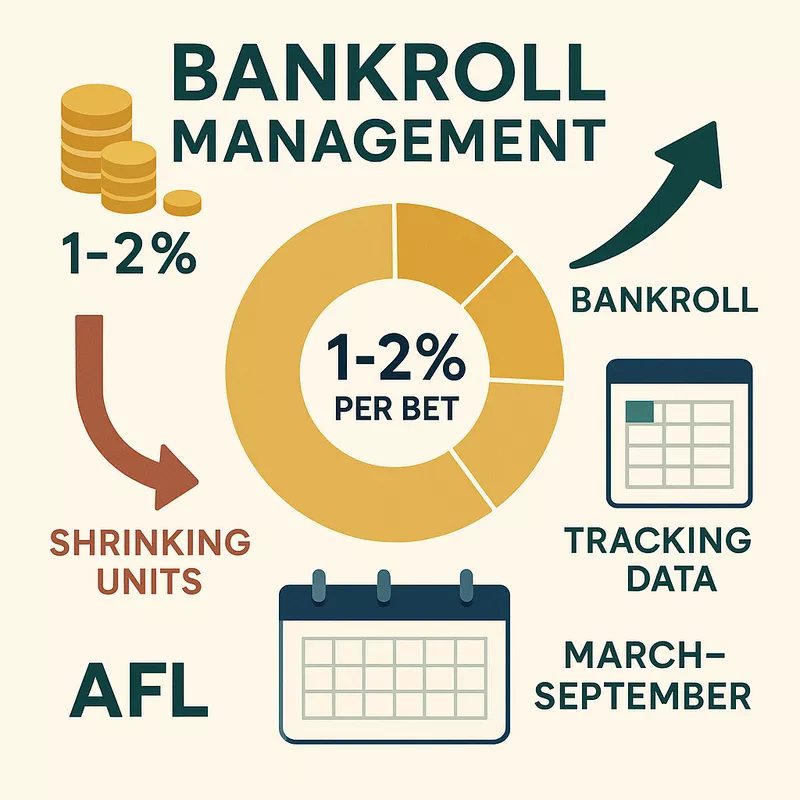
Tracking every bet reveals patterns you won’t notice otherwise. Use a spreadsheet with columns for date, match, selection, market type, odds, stake, result, profit-loss. After a month or two, patterns emerge. You might be profitable on line bets but losing on head-to-heads. Maybe your home team bets are emotional disasters but your underdog plays work well. Data shows you where your actual edge exists versus where you think it does.
Adjusting stakes as your bankroll grows or shrinks maintains consistent risk. If your $1000 bankroll grows to $1500 through winning bets, your units can increase proportionally. If it drops to $600, reducing unit size protects what remains. This dynamic approach lets you bet bigger when succeeding and smaller when struggling.
Avoiding tilt after bad beats requires emotional discipline. You’ve done thorough research, placed a smart bet, and your team is dominating. Then they concede three quick goals in the last five minutes and lose. It’s infuriating, but tilting leads to revenge betting on the next match without proper analysis. Take a break. Go for a walk. Come back when you’ve processed the frustration.
Taking profits at milestones feels good and protects gains. If you’ve doubled your starting bankroll, withdraw half and pocket it. This guarantees you finish ahead even if subsequent betting goes poorly. The psychological boost of securing profits helps maintain discipline and prevents giving everything back.
Specific Match Day Tips
Friday night football provides a different betting environment than Saturday and Sunday matches. The Friday night match is the week’s standalone game with intense focus. Lines and totals are often sharper because everyone’s watching and betting. Finding value requires identifying when the hype around featured matches pushes odds away from fair prices.
Saturday afternoon presents the main slate of matches, typically three or four games starting early afternoon. These matches have the most liquidity and the tightest odds. Bookmakers put their best odds compilers on Saturday fixtures. Finding value requires granular knowledge of matchups, not just surface-level team strength.
Saturday night marquee matches generate huge betting volume, particularly when popular teams like Collingwood or Richmond are playing. Public betting on big clubs often inflates their odds beyond fair value, making opponents attractive if you can stomach betting against crowd favorites.
Sunday matches sometimes offer the best value because they receive less attention than Friday and Saturday. Bookmakers might not price Sunday lines as carefully, and public betting volume is lower, meaning value bets don’t get bet out as quickly.
Interstate travel creates edges, particularly for teams flying across the country. West Coast and Fremantle traveling east face genuine disadvantages, as do Melbourne teams heading west. Factor travel into assessments but don’t overweight it professional athletes handle travel better than casual assumptions suggest.
Derby matches between cross-town rivals often throw form out the window. Western Derby, Showdown, QClash these matches are intensely emotional regardless of ladder position. Favorites don’t cover lines as reliably, and upsets happen more frequently. Treating derbies differently than normal matches prevents costly mistakes.
Finals football changes everything. Pressure intensifies, mistakes get magnified, and teams that thrive in regular season sometimes crumble in September. Experience matters more in finals. Teams with multiple players who’ve been deep into finals have advantages over inexperienced groups regardless of regular season form.
Long-Term Perspective
Becoming a profitable AFL bettor is genuinely difficult. Most people lose money over time, and the ones who don’t have significant edges built through years of experience, detailed analysis, and discipline about only betting when they identify value. Expecting immediate profits is unrealistic.
The goal for most punters should be entertainment value rather than profit. If betting on AFL makes watching footy more engaging and you lose less than you’d spend on other entertainment, that’s a success. Occasionally winning adds excitement. Losing less than expected is acceptable. Approaching betting with these expectations prevents disappointment and helps maintain perspective.
For those who want to pursue profitability, the path requires work. Watch as many matches as possible to develop intuition about team styles and player capabilities. Track betting results meticulously to identify what’s working. Study statistics to find edges. Compare odds across bookmakers religiously. Accept that edges are small and variance is high, meaning short-term results will fluctuate wildly.
Using responsible gambling tools prevents entertainment from becoming a problem. Set deposit limits equal to what you can afford. Set loss limits for single days and weeks. If betting stops being fun or starts causing stress, take a break or stop entirely. The footy will still be there, and your mental health matters more than any bet.
AFL betting in Australia offers tremendous depth and opportunity. The season is long, the markets are liquid, bookmakers are competitive, and information is widely available. Whether you’re betting for fun or taking it seriously, understanding what you’re doing helps you get better value and make smarter decisions. Just remember that even the best bettors lose plenty of bets the goal is losing less than you win over time.
Compare the latest odds using the list of licensed bookmakers in Australia available on our main portal.
