
Legal Betting in Australia: 2026 Setup & Checklist
 Available in US
So you want to start betting in Australia. Maybe you’re tired of watching the footy without any skin in the game, or you’ve decided the Melbourne Cup would be more exciting with a few dollars riding on your horse pick. Perhaps a mate won’t shut up about their betting wins and you’re curious whether there’s actually something to it. Whatever brought you here, you’re probably wondering how the whole thing actually works.
The good news is that betting in Australia is straightforward once you understand the basics. The bad news is that there’s a fair bit to learn before you should be throwing money around. Bookmakers are businesses designed to profit from punters, and they’re very good at it. Going in blind is a recipe for losing money faster than necessary.
This guide walks you through everything from choosing your first bookmaker to placing different types of bets, understanding odds, managing your money, and withdrawing winnings. By the end, you’ll know enough to bet confidently without making the rookie mistakes that cost beginners unnecessarily.
The 2026 Legal Framework: Verifying Bookmaker Security
Let’s get the boring but critical stuff out of the way first. You need to be at least 18 years old to bet in Australia. This isn’t a suggestion or a guideline—it’s the law, strictly enforced. Every licensed bookmaker will verify your age before letting you bet, so if you’re underage, stop reading and come back in a few years.
You’ll need valid identification to create an account. This means a current Australian driver’s license or passport. Some bookmakers accept other forms of ID, but those two work universally. You’ll also need proof of address, typically a recent utility bill or bank statement showing your name and residential address. This satisfies anti-money laundering regulations that all Australian financial services must follow.
Understanding that betting should be entertainment, not income, is crucial before you deposit a single dollar. The mathematics of betting are brutally clear: bookmakers build a margin into their odds that ensures they profit over time. Some individuals beat the bookmakers through skill, research, and discipline, but they’re rare exceptions. Most punters lose more than they win. If you’re betting with money you can’t afford to lose, you’re heading for trouble.
Set a budget before you start. Decide how much you can genuinely afford to spend on entertainment over a month, then allocate a portion of that to betting if you choose. This money should be completely separate from rent, bills, groceries, savings—anything essential. Losing it might be disappointing, but it shouldn’t impact your life.
The concept of responsible gambling tools matters from day one. Every Australian bookmaker offers deposit limits, time limits, and self-exclusion options. These aren’t just box-ticking exercises—they’re genuinely useful tools that can prevent casual betting from becoming problematic. Setting limits when you first sign up, before you’ve experienced the emotional swings of winning and losing, is much easier than trying to impose discipline later.
Choosing Your First Bookmaker
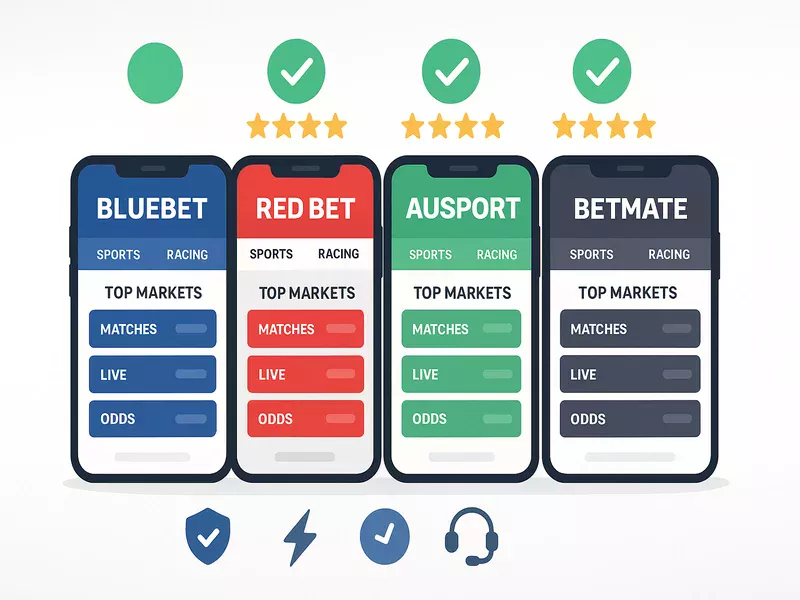
Australia has over 215 licensed betting operators, which creates paralysis by choice for newcomers. The truth is you don’t need to identify the absolute perfect bookmaker from day one. You need a solid, reliable option that’s legal, secure, and provides a good experience. You can always open additional accounts later once you understand what features matter most to you.
Valid licensing is non-negotiable. Check the ACMA register of licensed interactive wagering providers at acma.gov.au before signing up with any bookmaker. If they’re not listed there, they’re operating illegally and you should avoid them completely. Licensed bookmakers follow strict rules around consumer protection, dispute resolution, and financial security. Unlicensed operators have none of these obligations.
For complete beginners, bookmakers with intuitive interfaces and strong customer support make more sense than those offering the most markets or tightest odds. Bet365, Neds, and TAB all provide good experiences for newcomers. Bet365 has the most comprehensive coverage but can feel overwhelming. Neds focuses heavily on Australian racing and sports with a cleaner interface. TAB is the traditional option with retail locations if you prefer face-to-face support.
The mobile app quality matters because you’ll probably do most betting on your phone. Download the apps for two or three bookmakers and spend time browsing without depositing money. See which interface makes sense to you. Can you find markets easily? Is it clear how to place a bet? Does it feel responsive or laggy? First impressions matter because a frustrating app will annoy you constantly.
Payment methods should include options you’re comfortable using. PayID has become the standard for fast deposits and withdrawals in Australia, working directly from your bank account. Most modern bookmakers support it. Debit cards work universally. PayPal is convenient if you want betting funds separate from your main banking. Avoid bookmakers that only offer slow methods like bank transfers.
Customer service quality becomes crucial when something goes wrong. Before depositing money, test the support channels. Send a question through live chat or email and see how long it takes to get a useful response. If they’re slow or unhelpful with simple questions, they’ll be worse when you have actual problems.
Reading reviews from other punters provides useful perspective but be smart about it. Reviews on dedicated betting forums or comparison sites tend to be more balanced than random comments. Be skeptical of reviews that are either completely glowing or absolutely scathing—the truth usually sits somewhere in the middle.
Creating Your Account
The actual sign-up process is deliberately simple. Most bookmakers walk you through it step-by-step with clear prompts. You’ll provide basic personal information—name, date of birth, address, email, phone number. Be accurate. Providing false information violates terms and conditions and will cause problems later when you try to verify your identity or withdraw money.
Creating a strong password matters more than you might think. Use something unique that you don’t use elsewhere. A password manager makes this easy if you use one. Enabling two-factor authentication if the bookmaker offers it adds extra security and is worth the minor inconvenience.
The verification process happens next or shortly after registration. You’ll upload photos of your identification and proof of address. Make sure images are clear and all information is visible. Blurry photos or documents with details cut off will delay verification. Most bookmakers process verification within hours using automated systems. Some manually review documents, which can take up to 24 hours.
Setting responsible gambling limits during sign-up is mandatory at most Australian bookmakers. Don’t just pick arbitrary numbers to get through the process quickly. Think genuinely about what you can afford to deposit weekly or monthly. These limits are there to protect you. Setting them too high defeats the purpose. You can always adjust them later, though increases typically require a 24-hour cooling-off period.
Reading the terms and conditions seems tedious but matters. You don’t need to memorize everything, but understand the key points. What’s the minimum deposit and withdrawal? Are there any fees? What happens if you have a dispute? How do they handle bet settlements? What are the rules around promotions? Five minutes reading terms now can save serious headaches later.
Making Your First Deposit
Once your account is verified, you’re ready to deposit money. PayID is the fastest option for most Australians. It links to your bank account using your phone number or email, making transfers instant. From the bookmaker’s deposit page, select PayID, enter the amount, confirm the transaction through your banking app, and the funds appear in your betting account within seconds.
Debit cards work everywhere and are also instant. Enter your card details, specify the amount, confirm, and the money is available immediately. Be aware that some banks have started blocking gambling transactions as part of responsible gambling initiatives. If your card gets declined, check with your bank.
Remember that staying safe is crucial, so always use available responsible gambling tools to manage your play.
PayPal provides another instant option and has the advantage of keeping betting transactions separate from your main bank statements if that matters to you. Not all bookmakers support PayPal, but many major ones do. Link your PayPal account to the bookmaker, initiate the deposit, log into PayPal to confirm, and the money transfers instantly.
Bank transfer and BPAY are slower options, typically taking 24 to 48 hours. Use these if you’re planning ahead and not trying to bet on something starting soon. They work fine but the delay can be frustrating if you’re eager to get started.
Credit cards were banned for online gambling in Australia in 2024, so don’t waste time trying. The legislation prohibits bookmakers from accepting them. This change was part of responsible gambling reforms designed to prevent people from betting with borrowed money.
Minimum deposits vary by bookmaker but are typically between ten and twenty dollars. Start small. There’s no rush to deposit hundreds of dollars before you understand how betting works. Many beginners benefit from depositing something like fifty or a hundred dollars initially, treating it as entertainment money they’re comfortable losing while they learn.
Understanding Odds and How They Work
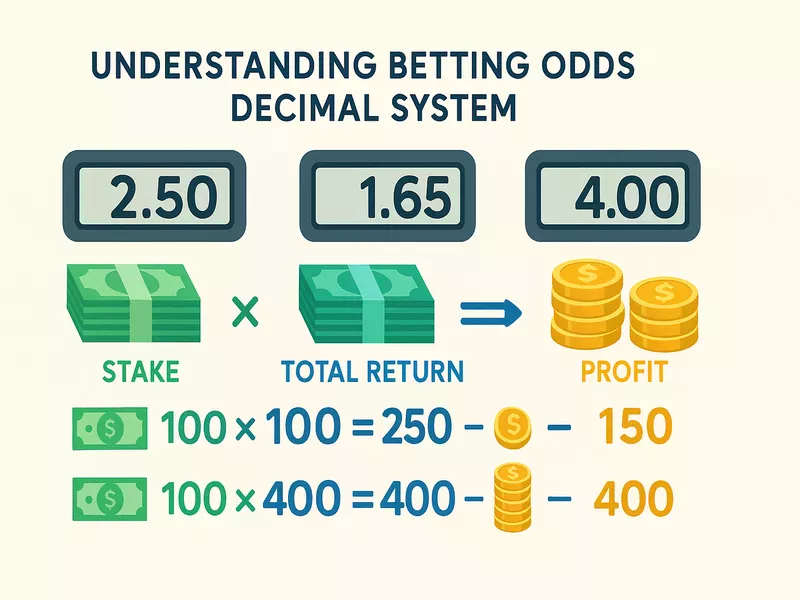
Australian bookmakers use decimal odds, which is fortunate because they’re the most intuitive format. The odds number represents your total return for every dollar staked, including getting your original stake back. Odds of 2.50 mean you receive $2.50 back for every dollar bet. Stake $20 at 2.50 and you’ll get $50 back if you win—your $20 stake plus $30 profit.
Lower odds indicate outcomes the bookmaker considers more likely. A heavy favorite might be 1.20, meaning they’re expected to win most of the time. Higher odds indicate less likely outcomes. A long-shot might be 10.00 or 20.00, reflecting lower probability but much higher potential payout.
The relationship between odds and probability is straightforward. Divide one by the odds to get the bookmaker’s implied probability. Odds of 2.00 imply 50 percent chance. Odds of 4.00 imply 25 percent chance. Odds of 1.50 imply roughly 67 percent chance. Understanding this helps you assess whether odds represent genuine value or not.
Bookmakers build a margin into their odds as their profit mechanism. If you add up the implied probabilities for all possible outcomes in a market, they’ll total more than 100 percent. That excess is the bookmaker’s margin. A market totaling 105 percent has a 5 percent margin. Lower margins are better for punters, though margins vary by sport and market popularity.
Comparing odds across bookmakers reveals significant differences. The same outcome might be priced at 2.20 with one bookmaker and 2.40 with another. That seemingly small difference represents nearly 10 percent better value. Over many bets, consistently taking better odds compounds into materially better results. This is why serious punters maintain accounts with multiple bookmakers and compare prices before betting.
Fixed odds lock in your price when you place the bet. If you back a horse at 3.00 and the price shortens to 2.50 before the race, you still get 3.00 if it wins. Conversely, if the price drifts to 4.00, you’re still locked at 3.00. Racing offers alternative options through tote betting, but for sports, fixed odds are standard.
Placing Your First Bet: Singles
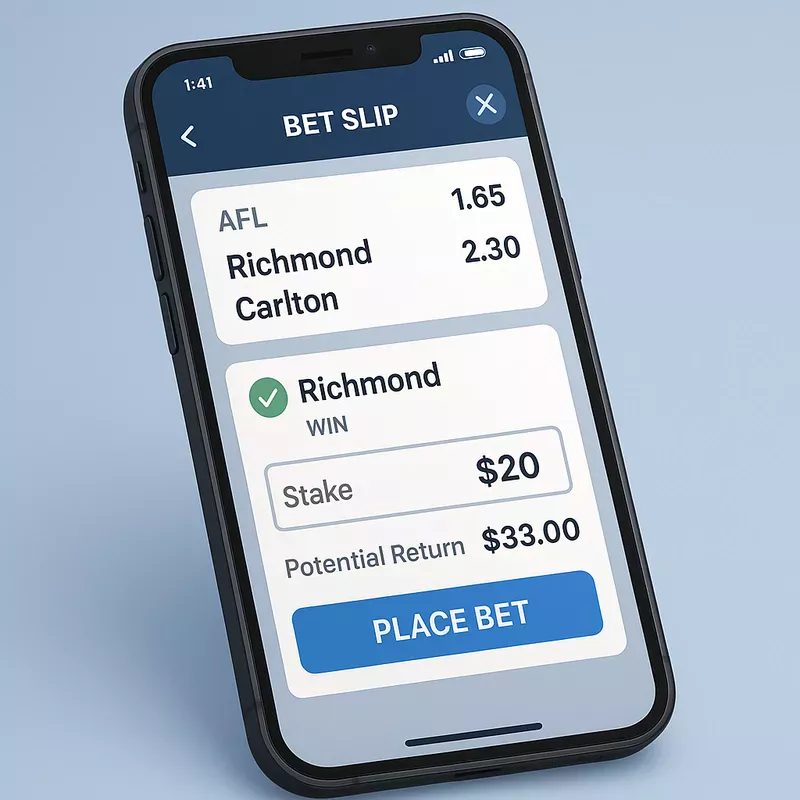
The mechanics of placing a bet are deliberately simple once you understand the interface. Start by browsing the sports or racing markets to find something you want to bet on. Let’s use an example of an AFL match between Richmond and Carlton.
Navigate to the AFL section, find the match, and look at the head-to-head market showing which team is favored to win. Richmond might be 1.65, Carlton 2.30. These odds tell you Richmond is the favorite and Carlton the underdog. If you want to back Richmond, click on the 1.65 price.
This action adds Richmond to your bet slip, which appears as a panel on the right side of the screen or bottom of your mobile app. The bet slip shows your selection, the current odds, and a field to enter your stake. Let’s say you want to bet $20. Enter 20 in the stake field.
The bet slip automatically calculates your potential return. With Richmond at 1.65 and a $20 stake, your return would be $33 if Richmond wins. This includes your $20 stake back plus $13 profit. Take a moment to review everything. Is the selection correct? Are the odds what you expected? Is the stake amount right?
When you’re satisfied, hit the confirm or place bet button. The bet gets sent to the bookmaker’s system for processing. Within a second or two, you’ll receive confirmation that your bet was accepted, along with a bet ID number. This ID is your proof the bet exists. Screenshot it or write it down, especially for larger bets.
The bet should immediately appear in your account’s open bets or pending bets section. If it doesn’t show up and you didn’t receive a bet ID, the bet wasn’t placed. This sometimes happens if odds change between you clicking confirm and the system processing the bet. The bookmaker’s system rejects bets where odds have moved significantly, requiring you to accept the new price or cancel.
Never assume a bet was placed just because you clicked the button. Always wait for confirmation. If something seems wrong, check your open bets section and your account balance. If money left your account but the bet isn’t showing, contact customer support immediately with screenshots of what happened.
Building Multi Bets
Multi bets combine multiple selections into a single bet where all selections must win for the bet to pay out. The appeal is that odds multiply together, creating potentially large payouts from small stakes. The catch is that even one wrong selection loses the entire bet.
Let’s say you want to build a simple three-leg multi for Saturday’s football. You like Richmond to beat Carlton, Collingwood to beat Essendon, and Geelong to beat Hawthorn. Richmond is 1.65, Collingwood is 1.85, Geelong is 1.45. Add all three selections to your bet slip.
The bet slip now shows all three selections and calculates the combined odds by multiplying them together. 1.65 × 1.85 × 1.45 equals approximately 4.42. With a $20 stake at combined odds of 4.42, your potential return is $88.40. That sounds attractive compared to betting $20 on a single selection.
But recognize the probability shift. For Richmond to win by itself, they need to beat Carlton. For your multi to win, Richmond AND Collingwood AND Geelong all need to win their matches. You’re now relying on three independent events all going your way. If any one of them loses, the entire bet loses. This is why multis are harder to win than singles despite the tempting payouts.
Same game multis work similarly but combine multiple markets from a single match. You might back Richmond to win, their star player to kick three-plus goals, and total match points over 150. The bet builder combines these into a single bet with multiplied odds. Same game multis are popular because they let you express complex opinions about how a match will unfold, but they’re also tricky because the selections often correlate in ways that make the combined odds less valuable than they appear.
Professional bettors generally prefer singles because they’re easier to assess for value and you only need one selection to win. Casual punters often prefer multis because they’re more exciting and offer bigger potential payouts. There’s no right answer, but understand that multis are riskier and should probably involve smaller stakes than you’d use for singles.
Different Types of Bets Explained
Head-to-head bets are the simplest format—pick which team or player wins. In AFL, NRL, cricket, tennis, and most other sports, you’re just choosing the winner. These bets are straightforward to understand and analyze, making them ideal starting points.
Line betting involves handicaps that give one team a virtual head start to even out lopsided matches. Richmond might be strong favorites over Carlton straight-up, but with a line of minus 24.5 points, they need to win by 25 or more for line bets to pay. Carlton gets plus 24.5, meaning they can lose by up to 24 points and line bets on them still win. Line betting offers better value when favorites are too short in head-to-head markets.
Over-under bets involve wagering whether a particular statistic will be above or below a specified number. Total match points over or under 165.5 in an AFL match, total goals over or under 2.5 in a soccer match, total games over or under 38.5 in a tennis match. These bets let you take a view on game flow without picking a winner.
Player props focus on individual performances rather than match outcomes. Will a particular AFL player kick three or more goals? Will an NRL player score a try? Will a cricketer score over 30.5 runs? These markets are popular but require good knowledge of individual players and how they match up against specific opponents.
First goalscorer or last goalscorer bets are common in football codes. You’re predicting which player will score the opening or final goal of the match. Odds are typically higher than other markets because pinpointing which of 20-plus players will do something specific is difficult.
Futures markets involve betting on outcomes decided weeks or months later. Who’ll win the AFL premiership? Who’ll take out the Brownlow Medal? Which team will finish top four? These bets tie up your money for extended periods but sometimes offer value when odds don’t accurately reflect long-term probability.
Race betting opens up exotic options beyond simple win bets. Quinella means picking the first two horses in any order. Exacta means picking them in the exact order. Trifecta adds a third horse, first four adds a fourth. These bets are harder to hit but pay significantly more. Mystery bets and same race multis add even more complexity and potential return.
Managing Your Bankroll
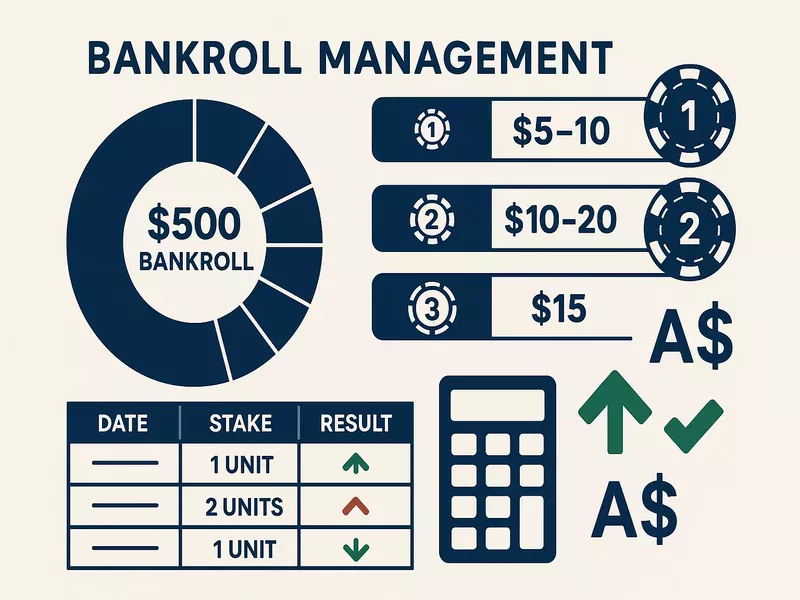
How you manage money determines whether betting remains entertainment or spirals into a problem. The unit system provides a framework used by professional bettors and serious amateurs. Your bankroll is the total amount you’ve set aside for betting. A unit is typically one to three percent of that bankroll.
Let’s say you’ve decided $500 is your betting bankroll for the next few months. One percent of $500 is $5, three percent is $15. You might bet one unit ($5-10) on standard bets where you have moderate confidence, two units ($10-20) on bets where you’ve identified strong value, and never more than three units on anything.
This system ensures that no single loss is catastrophic. Even a terrible run of losing ten bets in a row won’t wipe out your entire bankroll. You’ll still have money left to continue betting once your luck turns. This is the key difference between sustainable betting and going broke quickly.
Tracking bets might sound tedious but provides invaluable information. Use a simple spreadsheet with columns for date, sport, selection, odds, stake, result, and profit-loss. After a few dozen bets, patterns emerge. You might discover you’re profitable on AFL but losing on tennis. Maybe your single bets win more than your multis. Perhaps you bet better on afternoon events than evening ones. Data removes emotion and shows you where your edge actually exists.
Adjusting your unit size as your bankroll grows or shrinks maintains appropriate risk levels. If your $500 bankroll grows to $700 through winning bets, your units can increase proportionally. If it drops to $300 through losses, reducing unit size protects what remains. This dynamic adjustment helps you bet bigger when you’re doing well and smaller when you’re struggling.
The psychological aspect matters more than many beginners realize. Winning feels great and can lead to overconfidence, causing you to bet bigger or more frequently than you should. Losing feels terrible and triggers the urge to chase losses by betting more to get even. Both impulses are dangerous. Sticking to your system regardless of recent results is crucial.
Withdrawing Your Winnings
Eventually you’ll want to take money out, either because you’ve built profits you want to secure or you’re closing an account. The withdrawal process should be straightforward with reputable bookmakers, though first-time withdrawals often take longer than subsequent ones.
Navigate to the withdrawal or cashier section of your account. You’ll typically withdraw using the same method you deposited with. If you deposited via PayID, your withdrawal goes back to that bank account. If you used PayPal, it returns to PayPal. Card deposits usually require withdrawals via bank transfer since pulling money back to cards is more complicated.
Enter the amount you want to withdraw and confirm the request. The bookmaker’s system will process it according to their timeframes. The best operators handle withdrawals within hours. Standard is 24 to 48 hours. Anything beyond 72 hours is poor service.
First withdrawals almost always require additional verification even if your account is already verified for deposits. The bookmaker might request another photo ID, a selfie holding your ID, a recent bank statement, or other documentation. This is normal anti-money laundering procedure. Provide clear, complete documents to avoid delays.
Minimum withdrawal amounts vary but are typically between $10 and $50. Maximum withdrawals per transaction can range from a few thousand dollars to unlimited depending on the bookmaker and your account history. Large withdrawals sometimes trigger manual review, which adds processing time but is standard procedure.
Some bookmakers impose withdrawal fees, which is annoying but relatively rare. Check the terms before withdrawing. Most reputable operators don’t charge fees for standard withdrawal methods, though less common methods like international bank transfers might incur costs.
If a withdrawal is taking unreasonably long, contact customer support with your withdrawal request details. Legitimate delays are usually caused by verification issues that can be resolved with additional documentation. If the bookmaker is being evasive about why a withdrawal isn’t processing, that’s a serious red flag.
Common Beginner Mistakes to Avoid

Chasing losses is the fastest way to turn a bad day into a disaster. You’ve lost a few bets and feel frustrated. There’s another match starting soon that could get your money back. This thinking is poisonous. Chasing losses causes you to bet on events you haven’t properly analyzed, often with bigger stakes than usual, compounding the problem when those bets also lose. If you’ve hit your loss limit for the day, stop. Walk away. The betting will still be there tomorrow.
Betting without researching is essentially gambling on random outcomes. You need to have some basis for thinking your selection has better than even odds of winning or at least better odds than the bookmaker is offering. This doesn’t mean spending hours analyzing every bet, but it does mean having reasons beyond gut feel or hoping your favorite team pulls through.
Ignoring value in pursuit of winners is a subtle trap. A bet at 1.20 odds might be more likely to win than one at 3.00, but if the true probability suggests the 1.20 should be 1.10 and the 3.00 should be 2.50, the apparently safer bet is actually worse value. Over many bets, consistently taking poor value loses money even if your winners outnumber your losers.
Betting while drunk or emotional leads to terrible decisions. Alcohol impairs judgment. Strong emotions cloud thinking. Neither state produces good betting decisions. If you’ve been drinking or you’re particularly happy or upset about something unrelated to betting, that’s not the time to be placing bets. Wait until you’re clearheaded.
Betting more than you can afford is where entertainment crosses into problem territory. If losing a bet would cause you genuine financial stress rather than disappointment, you’re betting too much. Betting should never involve money needed for essential expenses. The moment you’re considering betting money you can’t afford to lose, step back and reassess.
Not using responsible gambling tools is like driving without a seatbelt. The tools exist to protect you. Deposit limits prevent you from losing more than you intended in the heat of the moment. Time limits stop marathon sessions where exhaustion leads to bad decisions. Self-exclusion options provide emergency brakes if betting is becoming problematic. Use these tools proactively before you need them desperately.
Moving Forward
You now know enough to start betting without making the most common and costly beginner mistakes. Open an account with a reputable bookmaker, deposit a modest amount you’re comfortable losing, and place a few small single bets on sports or events you understand. Pay attention to the process. Notice what feels confusing or smooth. Learn from both wins and losses.
Don’t expect to be profitable immediately or possibly ever. Most people lose money betting over time. The ones who don’t typically have significant knowledge advantages in particular sports or markets, combined with discipline about only betting when they identify genuine value. Building that expertise takes months or years, not days.
Treat betting as entertainment with occasional wins rather than income with occasional losses. Keep stakes small relative to your entertainment budget. Track your results honestly. Use responsible gambling tools. If betting stops being fun or starts causing stress, take a break or stop entirely.
The Australian betting market offers plenty of choices, competitive odds, and solid consumer protections through licensed operators. Used responsibly, betting can add engagement and excitement to watching sports. Just remember that the house always has an edge, and the goal is entertainment, not riches.
Our mission is to be your trusted online betting guide for all Australian sports events.
