
Australian Horse Racing: 2026 Form & Odds Database
 Available in US
Horse racing sits at the heart of Australian betting culture in a way that few other countries can match. The Melbourne Cup stops the nation every first Tuesday in November. Spring Racing Carnival transforms Melbourne into a week-long celebration of fashion, champagne, and punting. Saturday afternoon at the track or the pub with the races on television is ritual for hundreds of thousands of Australians.
This isn’t just history or nostalgia either. Australian racing generates billions in betting turnover annually, far exceeding most other sports. The infrastructure supporting racing is enormous TAB outlets in nearly every pub, dedicated racing channels, form guides published daily, and betting markets on every metropolitan and country race meeting across the country.
If you’re new to racing or looking to improve your punting, you’re entering a world with its own language, customs, and accumulated wisdom. The learning curve is steep, but the depth and variety of racing betting makes it endlessly engaging for those who invest the time. This guide walks through how Australian racing actually works, from understanding the different bet types to reading form guides, choosing between fixed odds and tote, and developing approaches that go beyond blind luck.
Decoding the 2026 Form Guide for Payouts
Australian racing splits into three main codes, each with distinct characteristics and betting patterns. Thoroughbred racing is the premium code featuring horses like Winx, Black Caviar, and Makybe Diva that become household names. These are the races that dominate major carnivals and attract the biggest betting pools. The horses are bred specifically for racing, trained intensively, and compete over distances from sprints around 1000 meters to staying races beyond 3000 meters.
Harness racing involves horses pulling a driver in a sulky rather than carrying a jockey. The standardbred horses either pace (moving legs on the same side together) or trot (diagonal legs together). Harness racing is hugely popular in New South Wales and Victoria with dedicated followers, though it doesn’t capture mainstream attention like thoroughbreds. The races typically run at night under lights, creating a different betting rhythm than daytime thoroughbred meetings.
Greyhound racing features dogs chasing a mechanical lure around tight tracks. Races are short and sharp, usually decided within 30 seconds. The turnaround between races is quick, making greyhound meetings attractive for punters who want continuous action. The betting pools are smaller than thoroughbreds but the racing is accessible and straightforward.
This guide focuses primarily on thoroughbred racing since that’s where most Australian betting happens and where the biggest opportunities exist. The principles apply across all codes, but thoroughbreds offer the deepest markets and most comprehensive information.
Metropolitan tracks like Flemington, Randwick, Rosehill, Caulfield, and Morphettville host the premium Saturday racing. These meetings feature the best horses, largest prize money, and biggest betting pools. The quality is consistently high and form generally holds more reliably than at smaller venues.
Provincial and country racing happens throughout the week at smaller tracks. The horses are generally lower quality, form is less reliable, and betting pools are smaller. But these meetings also sometimes offer value because bookmakers and punters pay less attention, creating opportunities for knowledgeable locals or those willing to dig into form.
Bet Types in Racing
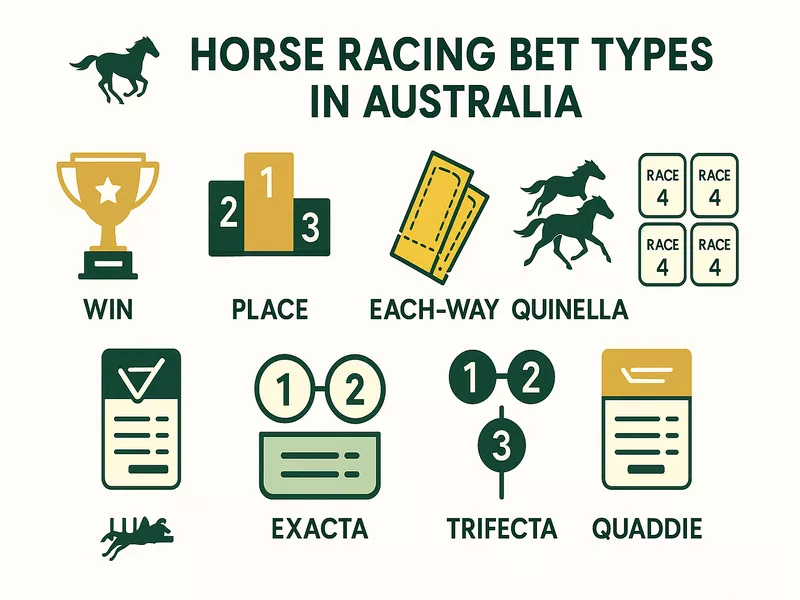
Win bets are the foundation you’re backing a horse to finish first. Simple, straightforward, and the most popular bet type. If your horse wins, you collect. If it finishes anywhere else, you lose. Win betting works for any race and any horse, from rank outsiders at 50 dollars to short-priced favorites at 1.50.
Place bets pay if your horse finishes in the placings, which means different things depending on field size. In races with seven or fewer runners, place bets pay for first or second. With eight to fifteen runners, place bets pay for first, second, or third. With sixteen-plus runners, place bets pay for first through fourth. The returns are smaller than win bets because you’re covering more outcomes, but the probability of collecting is higher.
Each-way betting combines a win bet and a place bet in a single transaction. You’re essentially making two bets one on the horse to win, one on it to place. If the horse wins, both bets collect. If it finishes in the placings without winning, the place portion pays out. Each-way betting costs double your intended stake because you’re placing two bets, but it provides insurance against your selection finishing close without winning.
The math on each-way betting is crucial to understand. Backing a horse each-way at 10 dollars with a 20-dollar stake means 10 dollars on the win and 10 dollars on the place. If the horse wins, you collect the full 10-dollar win dividend plus a reduced place dividend (typically about a quarter of the win odds). If the horse finishes second or third, you lose the win bet but collect the place dividend on your 10-dollar place bet.
Quinella betting involves picking the first two horses in any order. If you select Horse 3 and Horse 7 in a quinella and they finish first and second regardless of which one actually wins, your bet collects. Quinellas are popular because they’re easier to hit than exactas but still offer decent returns when favorites don’t fill the first two positions.
Exacta betting requires picking the first two horses in the exact order. Horse 3 first, Horse 7 second if they finish that way, you win. If Horse 7 beats Horse 3, you lose despite having the right two horses. Exactas pay better than quinellas because the additional difficulty of getting the order right reduces the number of winning tickets.
Trifecta betting adds a third horse to the mix. First, second, third in exact order. The difficulty jumps significantly, which is why trifectas can pay enormous dividends when unlikely horses fill the frame. A trifecta combining three outsiders in the right order can return thousands for a dollar stake.
First four betting extends the concept to four horses in exact order. These are notoriously difficult to hit but occasionally pay life-changing amounts when long-shots dominate a race. Most punters who play first fours use boxed or floating combinations to cover multiple outcomes rather than trying to pick the exact order.
Quaddie betting involves picking the winners of four consecutive races, typically the last four at a meeting. You’re not predicting the order within races, just which horse wins each of the four races. Quaddies are popular because they offer large potential returns for relatively small stakes, but hitting all four winners is genuinely difficult. Flexi-betting on quaddies lets you cover multiple horses per leg while reducing your percentage stake, which makes hitting the combination more likely but reduces your dividend proportionally.
Same race multis combine different bet types within a single race into a multi bet with multiplied odds. You might back a horse to win, another to place, and total winning margin over 2.5 lengths, all from one race. If all selections hit, the odds multiply together for your payout. Same race multis are relatively new but have become popular because they let you express complex views about how a race will unfold.
Fixed Odds Versus Tote Betting
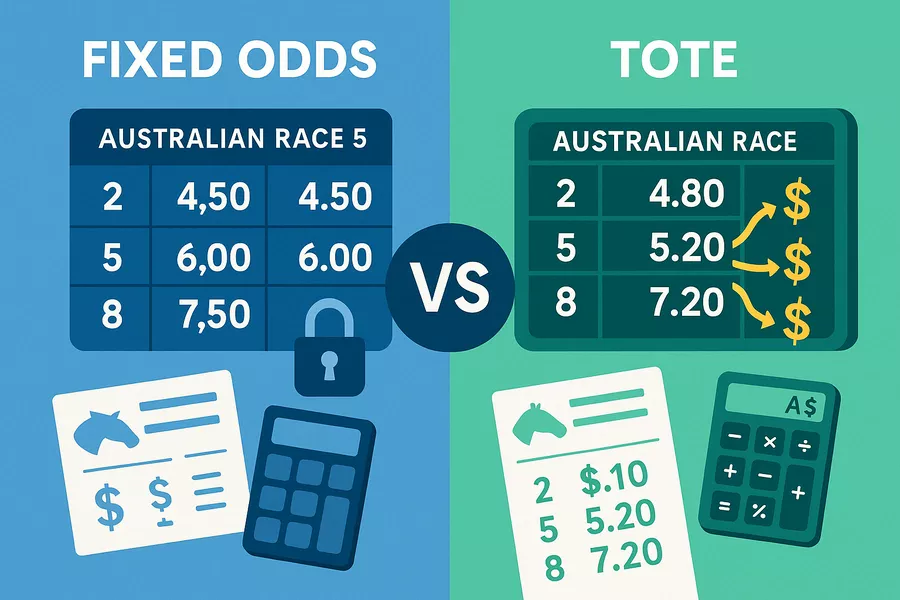
Understanding the difference between fixed odds and tote betting is crucial for Australian racing punters because you’re often choosing between them on the same race.
Fixed odds lock in your price when you place the bet. If you back a horse at 4.00 fixed and the price drifts to 6.00 before the race, you still get 4.00 when it wins. Conversely, if the price crashes to 2.50, you’re locked at 4.00. Fixed odds provide certainty you know exactly what you’ll be paid if your selection wins. This certainty is valuable when you’re confident a horse’s price will shorten or when you want to lock in value you’ve identified early.
Tote betting is pool-based, sometimes called parimutuel. All bets on a race go into a pool, the track takes a commission (typically 14-17 percent depending on bet type), and the remaining money gets divided among winning tickets. The dividend isn’t determined until after the race when the pool closes. If you back a horse on the tote, you don’t know the exact payout until the race is over and dividends are declared.
The tote dividend depends entirely on betting patterns. A well-supported favorite might pay only 2.50 on the tote despite being 3.50 in early fixed odds. An overlooked horse might pay 12.00 on the tote while being available at 8.00 fixed. The relationship between fixed odds and likely tote dividends shifts constantly based on betting flows.
Starting price (SP) is the tote dividend at the moment the race starts. Some punters wait until the last minute to assess betting patterns and then take SP rather than committing to fixed odds earlier. This approach can capture value when horses drift on betting exchanges or tote pools, but it also means accepting whatever price materializes.
Best Tote Plus SP guarantees have become standard at Australian bookmakers. Instead of choosing between fixed odds and tote, you automatically get whichever pays better. Take fixed odds at 5.00, and if the tote dividend ends up being 6.50, you get paid at 6.50. If the tote dividend is only 4.20, you still get your fixed 5.00. This feature eliminates the strategic choice for most punters just take fixed odds and the guarantee protects you.
Best of the Best promotions go further by comparing your fixed odds, tote dividend, and the best price offered by on-course bookmakers, paying whichever is highest. These guarantees are genuinely valuable and represent bookmakers competing aggressively for racing business.
When to take fixed odds versus waiting for tote depends on several factors. If you’re betting early in the week on Saturday races, fixed odds let you lock in prices before betting markets move. If you’re betting shortly before a race and suspect a horse is being overlaid (attracting less tote money than its chances deserve), taking SP or tote might deliver better value. If your bookmaker offers Best Tote guarantees, taking fixed odds with that protection is usually optimal.
Exotic bets like quinellas, exactas, and trifectas typically pay tote dividends rather than fixed odds because calculating fixed odds on combination bets is complex. A few bookmakers offer fixed-price exotics on major races, but tote is standard. This means your exotic bet payouts depend entirely on betting patterns if favorites dominate the exotics pool and you’ve found value backing outsiders, you’ll be rewarded handsomely.
Reading Racing Form Guides
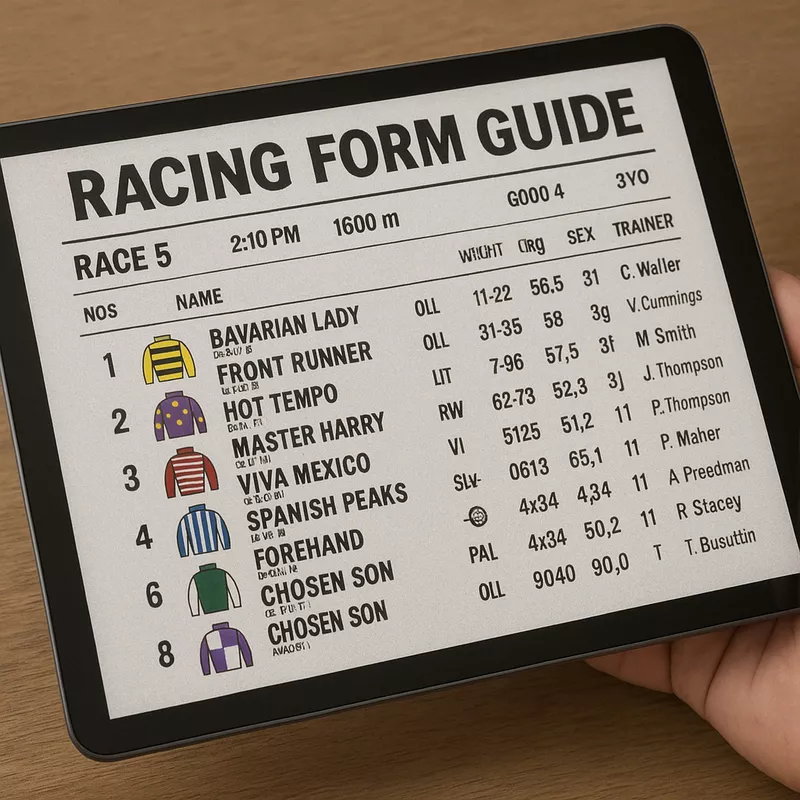
Form guides are the racing punter’s bible, containing everything you need to assess each horse’s chances. Learning to read them efficiently is essential for making informed bets rather than relying on names, colors, or gut feelings.
Recent form appears as a string of numbers and letters showing finishing positions in recent starts. A form line reading 2-1-3-5 means the horse finished second, first, third, and fifth in its last four starts. Consistency matters a horse showing 2-2-3-2 is more predictable than one showing 1-9-1-8 despite both having two wins. The inconsistent horse might be capable on its day but is riskier.
The class of races horses have contested matters enormously. Winning against battlers in a country maiden is completely different from winning a Group 1 race in town. Form guides indicate race class through abbreviations G1, G2, G3 for Group races, Listed for Listed races, BM64 for benchmark handicaps at different ratings. A horse stepping up or down in class faces different challenges.
Track conditions affect results significantly. Australian tracks are rated from Firm 1 (hardest) through Good 3, Soft 5-7, to Heavy 8-10 (wettest). Some horses are track specialists who only perform on firm ground. Others improve dramatically in the wet. The form guide shows each horse’s record at different track ratings, revealing preferences. Ignoring track conditions when analyzing form is a costly mistake.
Distance suitability is critical. Some horses are pure sprinters who can’t stay beyond 1200 meters. Others are stayers who need 2000-plus meters to show their best. The form guide displays each horse’s record at today’s distance and similar distances. A horse trying 2000 meters for the first time when all its wins came at 1400 meters is a significant unknown.
Barrier draws influence chances more at some tracks than others. Flemington and Randwick have long straights where outside barriers matter less. Tight-turning tracks where leaders dominate make inside barriers much more valuable. The form guide shows each horse’s barrier today and their record from inside versus outside gates.
Jockeys and trainers appear prominently in form guides for good reason. Elite jockeys like James McDonald, Damien Oliver, and Craig Williams genuinely improve horses’ chances through skill. Top trainers like Chris Waller, Ciaron Maher, and Gai Waterhouse consistently prepare horses to peak condition. Combinations of elite trainers and jockeys perform measurably better than random pairings.
Weight carried matters in handicap races where horses carry different weights to equalize chances. A horse carrying 54 kilograms has a significant advantage over one lugging 60 kilograms, assuming similar ability. Weight differentials create opportunities sometimes a quality horse carrying extra weight is still good value, other times it’s genuinely disadvantaged.
Last-start performance provides immediate context. Did the horse win easily or barely hold on? Finish strongly or weaken late? Get checked in running or enjoy a clear run? Form guides include brief race comments describing each horse’s last start, revealing information raw finishing positions miss.
Factors Affecting Race Outcomes
Weather and track conditions create the most obvious race-day variables. Checking the Bureau of Meteorology forecast for the track location is essential, particularly if rain is expected. A track rated Good 3 in the morning might be Soft 6 by race time if steady rain falls. Horses with poor wet-track form become significantly less appealing as conditions deteriorate.
Betting market movements between when odds open and when races start reveal where money is flowing. A horse opening at 8.00 and firming to 4.50 is clearly attracting support, suggesting informed money or perceived value. A horse drifting from 3.00 to 5.00 indicates the market has soured on its chances, possibly due to training reports, barrier draws, or jockey changes.
Pace scenarios determine how races unfold. Races with multiple front-runners create fast early pace, which suits horses who settle midfield and run on late. Races with no obvious leaders create slow pace, favoring horses with early speed who can control the race. Assessing likely pace based on horses’ racing styles helps predict which running styles will be advantaged.
Gear changes indicated in form guides suggest trainers are trying something different. Adding blinkers to restrict peripheral vision and improve focus can dramatically improve some horses. Tongue ties, nose rolls, pacifiers each piece of gear serves specific purposes. First-time gear changes are particularly significant because they indicate the trainer believes something needs adjusting.
Trainers and jockeys booking indicate confidence levels. When a top trainer books an elite jockey for a horse, it suggests they rate the horse’s chances highly. When a horse that usually carries a leading jockey drops to a lesser rider, it might indicate the horse isn’t expected to perform well today.
Betting trends for the same jockey or trainer across the meeting reveal patterns. A jockey winning the first three races is red-hot and might be worth following. A stable having all its runners drift in betting might indicate they’re not expected to perform today. These broader patterns provide context for individual selections.
Emergency acceptors and scratchings change race dynamics significantly. When a favorite scratches late, the entire betting market reshuffles. When an emergency runs and is completely uncompetitive, it affects the early pace or the way the race unfolds. Staying updated on scratchings right up to race time prevents betting on horses that won’t actually run.
Strategies for Racing Betting
Backing favorites blindly is a guaranteed long-term loss. Yes, favorites win more often than any other horse, roughly 30-35 percent of races. But they’re priced accordingly, typically below 3.00 and often below 2.00. The returns don’t overcome the times they lose. Favorites are sometimes good value, but backing them simply because they’re favorites is a recipe for slowly bleeding money.
The question isn’t whether a horse is favorite, it’s whether the odds accurately reflect winning probability. A favorite at 2.00 needs to win more than 50 percent of the time just to break even. If you assess their true chances at 55-60 percent, there’s marginal value. If you assess them at 45 percent, they’re overbet and represent negative value despite being favorite.
Each-way betting on roughies can be profitable in certain situations. Large fields where 30-1 and 40-1 shots regularly place create opportunities. The place dividends on these horses are substantial, and you only need them to finish in the frame to collect. The mathematics of each-way betting favors long-priced horses more than short-priced ones because the place odds don’t compress as much as win odds.
Dutching involves betting on multiple horses in the same race with stakes calculated so that any of them winning returns the same profit. If you like three horses in a race and can’t decide between them, dutching lets you back all three with appropriate stakes. This reduces variance and guarantees profit if one of your selections wins, though obviously you’re increasing total stakes.
Exotic betting on roughies offers massive potential returns but requires discipline. Trifectas and first fours combining long-shots can pay thousands or tens of thousands for small stakes. But the hit rate is extremely low. Treating these bets as entertainment with tiny stakes makes sense. Staking significant money on exotic combinations is a fast way to lose unless you’re genuinely skilled at identifying mispriced longshots.
Following particular stables or jockeys who consistently find value creates edges over time. Some trainers specialize in preparing horses for first-up runs after spells. Others target specific race types. Identifying these patterns through tracking results helps you spot situations where their runners might be underrated.
Avoiding emotional betting on names, colors, or numbers seems obvious but trips up many casual punters. Backing horses because they share your kid’s name or because you like the jockey’s silks isn’t a strategy. It’s fine for tiny fun bets, but any serious money should be based on actual analysis.
Specializing in particular race types or distances helps you develop expertise. Some punters focus exclusively on sprint races under 1400 meters. Others specialize in staying races or two-year-old racing. Becoming genuinely knowledgeable about a niche is more achievable than trying to be expert on all racing.
Managing Your Racing Bankroll
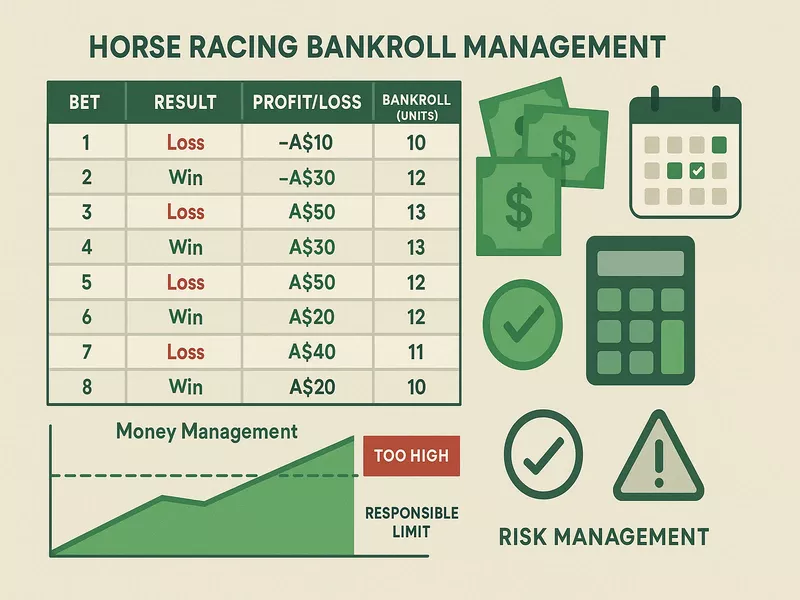
Racing offers betting opportunities nearly every day of the week across the country, which is both blessing and curse. The constant action means plenty of chances to find value, but also plenty of opportunities to lose money quickly if you’re undisciplined.
Setting a weekly or monthly bankroll creates boundaries. Decide how much you’re allocating to racing for the period. This should be entertainment money you can afford to lose. Once exhausted, you stop betting until the next period begins. The temptation to chase losses by topping up mid-period is enormous after bad days, but giving in accelerates losses.
The unit system provides structure. If your monthly bankroll is 500 dollars, one unit might be 5-10 dollars. Bet one unit on standard selections, two units on stronger fancies, never more than three units on anything. This ensures even a terrible streak of losses leaves you with most of your bankroll to continue betting.
Tracking results religiously reveals where your edge actually exists. Use a spreadsheet recording every bet date, race, horse, bet type, odds, stake, result, profit-loss. After months of data, patterns emerge. You might be profitable backing horses first-up from a spell but losing money on horses resuming from long breaks. Maybe your each-way betting at big prices works but your win betting on favorites doesn’t. Data shows reality versus perception.
Adjusting stakes based on confidence makes sense but requires honesty with yourself. Genuinely strong fancies where you’ve identified clear value deserve bigger stakes. Casual bets where you just want involvement deserve minimum stakes or should be skipped entirely. The difficulty is that most punters overestimate their edge, thinking every bet is strong value.
Taking profits regularly protects gains and maintains discipline. If you’ve built your starting bankroll from 500 dollars to 800 dollars, withdraw 200 and bank it. This guarantees you’re ahead even if subsequent betting goes poorly. The psychological benefit of securing profits prevents giving everything back during inevitable losing streaks.
Avoiding tilt after bad beats requires emotional control. Your horse is traveling beautifully and looks certain to win, then gets blocked for room on the turn and finishes third. Or it wins but gets disqualified in the protest. These things happen constantly in racing. Letting frustration drive you to immediately bet on the next race without proper analysis compounds losses.
Specializing in Saturday metropolitan racing versus weekday racing requires different approaches. Saturday features the best horses, biggest fields, tightest odds, and deepest pools. Finding value requires granular analysis. Weekday racing at provincial and country tracks has softer markets where bookmakers and tote pools might misprice horses, but the form is less reliable and results more unpredictable.
Major Race Days and Carnivals

Spring Racing Carnival in Melbourne from October through November is Australian racing at its peak. The Caulfield Cup, Cox Plate, Melbourne Cup, and numerous Group 1 races attract the best horses and the biggest betting pools. The atmosphere is electric, the racing is world-class, and the betting markets are incredibly competitive.
Betting during Spring Carnival requires adjusting expectations. The odds are sharp because everyone’s watching and betting. Finding value is harder than regular weekends. Casual punters flood bookmakers, but so do serious professionals. The horses are elite level, making form more predictable but also making upsets rarer at the top end.
Melbourne Cup Day is Australia’s biggest betting day annually. The race itself is a handicap over 3200 meters attracting internationals and Australia’s best stayers. The betting pool is enormous, the public interest is maximum, and the value is often poor because casual money pushes favorites and popular horses to unbackable odds. Contrarian thinking identifying horses the public has underrated sometimes works better than backing consensus picks.
The Golden Slipper in Sydney each March is the world’s richest two-year-old race. Two-year-old form is notoriously difficult to assess because the horses are young, relatively inexperienced, and developing rapidly. Some horses who look world-beaters at two never reach the same heights at three and beyond. Others improve dramatically. Betting on two-year-old racing requires different analysis than older horses.
The Everest in October at Randwick is the world’s richest turf race, run over 1200 meters. Sprint racing at this level showcases incredible speed and the margins between horses are tiny. Barrier draws matter enormously in such a short race. The betting is typically dominated by a few elite chances with little value available unless you can identify an underrated speedster.
Provincial Cups and country carnivals throughout the year offer genuine betting value because they receive less attention. Bendigo Cup, Grafton Cup, Darwin Cup these meetings feature lower-grade horses but also softer betting markets where informed punters can find edges that don’t exist at metropolitan level.
Final Thoughts on Racing Betting
Horse racing betting in Australia is a pursuit that rewards knowledge, patience, and discipline while punishing laziness, emotion, and greed. The romanticized image of the everyday punter striking it rich exists, but the reality is that most people lose money over time. The mathematics of racing favor the bookmakers and the tote pool commission structure, creating headwinds for punters.
The successful racing punters are those who’ve invested years developing expertise in particular race types or stable patterns, who religiously compare odds and take best prices, who track results honestly and adjust when strategies aren’t working, and who maintain iron discipline about bankroll management. Becoming consistently profitable is genuinely difficult and most people never get there.
For the majority of punters, the goal should be entertainment value rather than profit. If betting on racing makes watching the Melbourne Cup or Saturday afternoon at Flemington more engaging, and you lose less than you’d spend on other entertainment, that’s success. Occasionally winning adds excitement. Keeping losses manageable is acceptable.
The depth and variety of Australian racing is remarkable. The quality of horses, the sophistication of markets, the comprehensive form information everything you need to make informed bets exists if you’re willing to learn. Whether you’re betting for fun or pursuing profitability, understanding what you’re doing helps you get better value and make smarter decisions. Just remember that even the best punters lose plenty of bets, and the horses don’t care about your mortgage payment.
